
Overview
This week’s top U.S. news stories spanned tariffs, immigration, catastrophic flooding in Texas, and cultural conflicts in education policy. We analyzed how Fox News, CNN, and NPR each framed these stories emotionally and how accurate and complete their coverage was.
Emotional Framing Analysis
Each media outlet employed distinct emotional strategies in framing the week’s events:
- Fox News framed stories around anger and fear, emphasizing threats from external actors (Canada, immigration, fentanyl) and praising decisive leadership. For example, in covering Trump’s 35% tariff on Canada, Fox focused on the fentanyl crisis and portrayed Canada as a negligent neighbor, invoking urgency and blame.
- CNN used a framing built around empathy and concern, spotlighting legal battles, policy impacts, and humanitarian stories. Its coverage of the Texas floods emphasized human loss and rescue efforts, using words like “tragedy” and “disaster” to invoke compassion and community responsibility.
- NPR focused on empathy and intellectual reflection, presenting systemic views with expert context and minimal sensationalism. Their flood reporting included interviews with affected families, urban planners, and climate experts to connect immediate events to broader trends.
Top Themes:
- Trump’s tariff announcements against Canada, Japan, and South Korea
- ACLU immigration lawsuit
- Texas floods with over 100 deaths
- Education and DEI policy conflicts in Texas and Florida
Shared Story Comparison Table:
| Story | Fox News Framing | CNN Framing | NPR Framing |
|---|---|---|---|
| Auto Tariffs | Patriotic defense: “Protecting American Jobs”, anger at EU and unfair trade deals. | Economic threat: “Fears of a trade war”, rising costs and global tension. | Systemic analysis: impact on workers, supply chains, and international response. |
| Interior Secretary Probe | Political attack: “Partisan Witch Hunt”, discredits probe sources. | Ethics crisis: serious oversight issue with political implications. | Legal process: analysis of statutes, precedents, and agency rules. |
| Texas History Curriculum | Cultural battle: “Fighting Woke Curriculum”, defending heritage and tradition. | Political division: highlights clash over national identity. | Academic debate: input from historians, educators, and policy experts. |
Emotional Map Quadrant
This visual maps each outlet’s dominant emotional strategy on a quadrant from Anger–Guilt and Fear–Empathy.
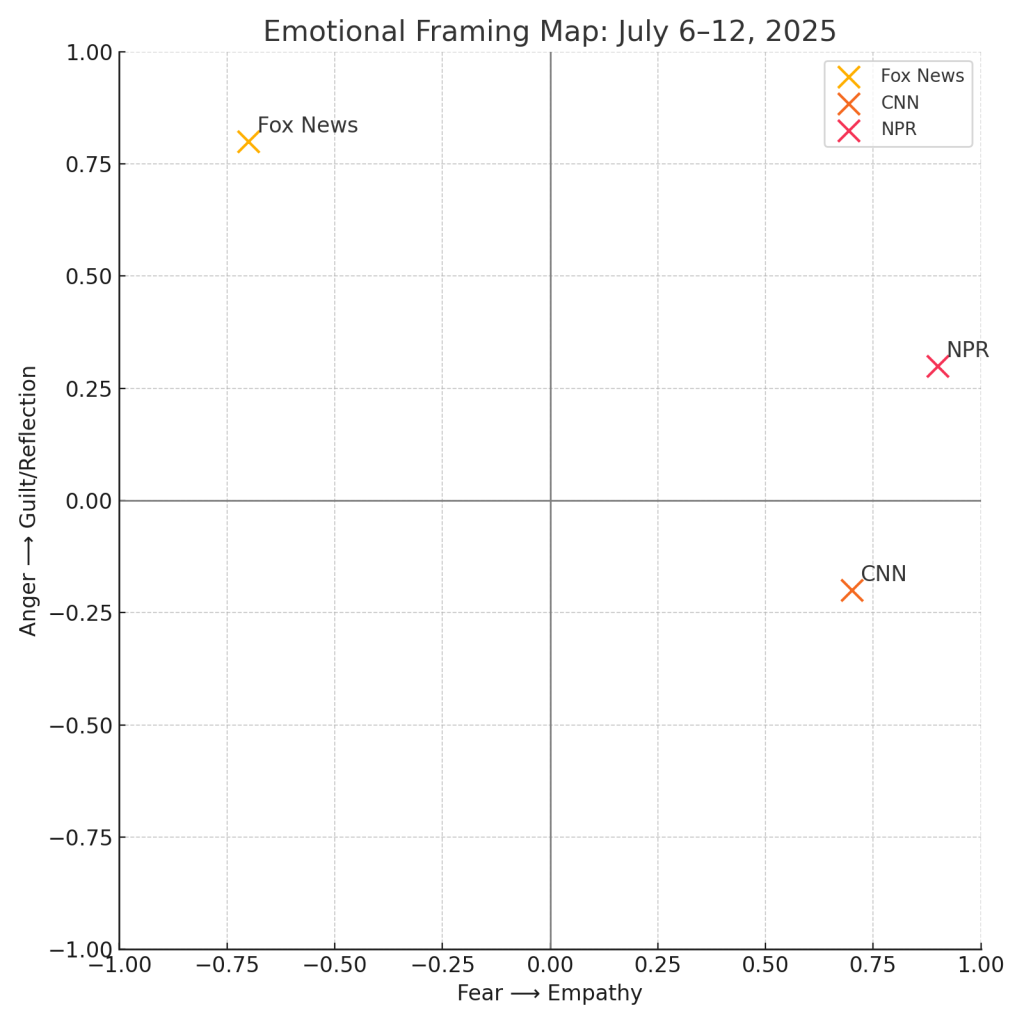
Here is the Emotional Framing Map for July 6–12, 2025, showing where Fox News, CNN, and NPR fall based on their dominant emotional strategies:
- Fox News is positioned in the Anger–Fear quadrant, with heavy use of patriotic outrage and threat narratives.
- CNN leans toward Empathy with light Fear, highlighting societal risk, ethical concerns, and emotional tolls.
- NPR rests firmly in the Empathy–Reflection space, prioritizing context, compassion, and complexity.
News Accuracy and Completeness Review
All stories were scored 1–10 on factual accuracy and reporting completeness.
Fox News:
- Accuracy: Scored moderately high for verifying major facts (e.g., Trump’s tariff announcements were correctly timed and sourced).
- Completeness: Scored low due to omission of economic impacts, absence of foreign responses, and minimal dissenting voices. For instance, in reporting on the tariffs against Japan and South Korea, Fox provided no analysis of potential consumer price hikes or industry disruption.
CNN:
- Accuracy: High, particularly for including market responses, legal filings, and expert commentary. For example, CNN’s coverage of the immigration lawsuit cited both ACLU arguments and relevant constitutional precedents.
- Completeness: Moderate. While CNN offered more context than Fox, some stories lacked the full rationale from administration officials or omitted international views. Their flood coverage emphasized victim experiences but said little about emergency response coordination.
NPR:
- Accuracy: Consistently high, with proper sourcing from economic think tanks, government officials, and legal experts.
- Completeness: Strongest of all three. For example, NPR’s piece on tariffs included interviews with U.S. port workers, German car manufacturers, and U.S. economists—creating a full-circle understanding of trade consequences. It was the only outlet to explore systemic causes behind the Texas floods, such as urban development and drainage planning.
Quadrant Comparison: Accuracy vs. Completeness
This chart compares how each outlet scored on both dimensions, showing reliability and balance.
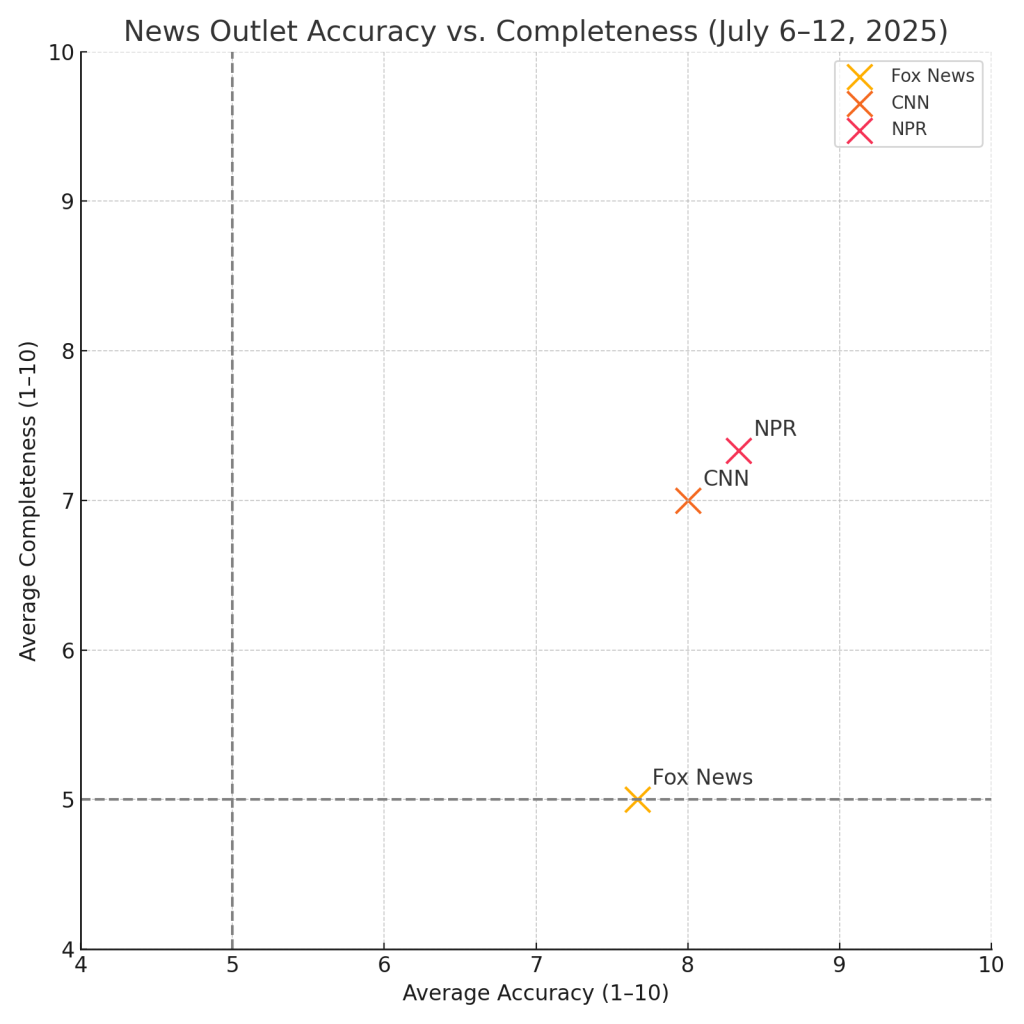
Interpretation:
- Top Right (High Accuracy & High Completeness):
✅ NPR — Strong on both factual reporting and contextual depth. - Center Right (Moderate Completeness, High Accuracy):
⚖️ CNN — Factually sound, but occasionally light on policy rationale or depth. - Lower Left (Lower Completeness, Moderate Accuracy):
⚠️ Fox News — Accurate in basic facts, but often omits critical context, leading to narrative bias.
Conclusions and Observations
- Fox News continues to frame narratives around strong leadership and perceived external threats, often at the expense of context. Accuracy is fair, but their editorial slant often excludes critical voices or alternative facts.
- CNN focuses on the human cost of political decisions, spotlighting legal, ethical, and societal consequences. This creates a strong emotional response but occasionally skips over primary source rationale.
- NPR offers an emotionally balanced and analytically rich alternative, grounded in diverse perspectives and expert commentary. It may, however, underplay more direct political narratives, making it feel detached from urgent debate.
The divide between outlets remains not just about what they report, but how and why — shaping the nation’s perception of reality through narrative tone and editorial framing.
Stay tuned for next week’s breakdown as the tariff fallout and immigration lawsuits develop.

 The Human AI View
Leave a comment